
Your Custom Text Here
Custom One Inch Lined Plenum Boxes and Plenum Sleeves
Depending on the job, commercial or residential, there may be a need for fiber glass acoustical lining on the inside of the duct work. Duct liner, in it’s simplest form, is there to help reduce noise and provide a minimal R-value—much less than duct wrap—to provide more consistent temperatures and energy efficiency.
K&E Sheet Metal’s morning was full of duct liner, one inch thick to be exact. The thickness can range from 1/2” to 2”. Our shop mostly deals with half-inch and one-inch. Occasionally, we will get a spec (specification) for 1 1/2” or 2”, but it’s rare for the size jobs—commercial vs. Industrial— we fabricate for. In future, as the shop grows, that could change.
The liner is cut to size, adhered to the metal with glue, and then secured with corresponding weld pins.
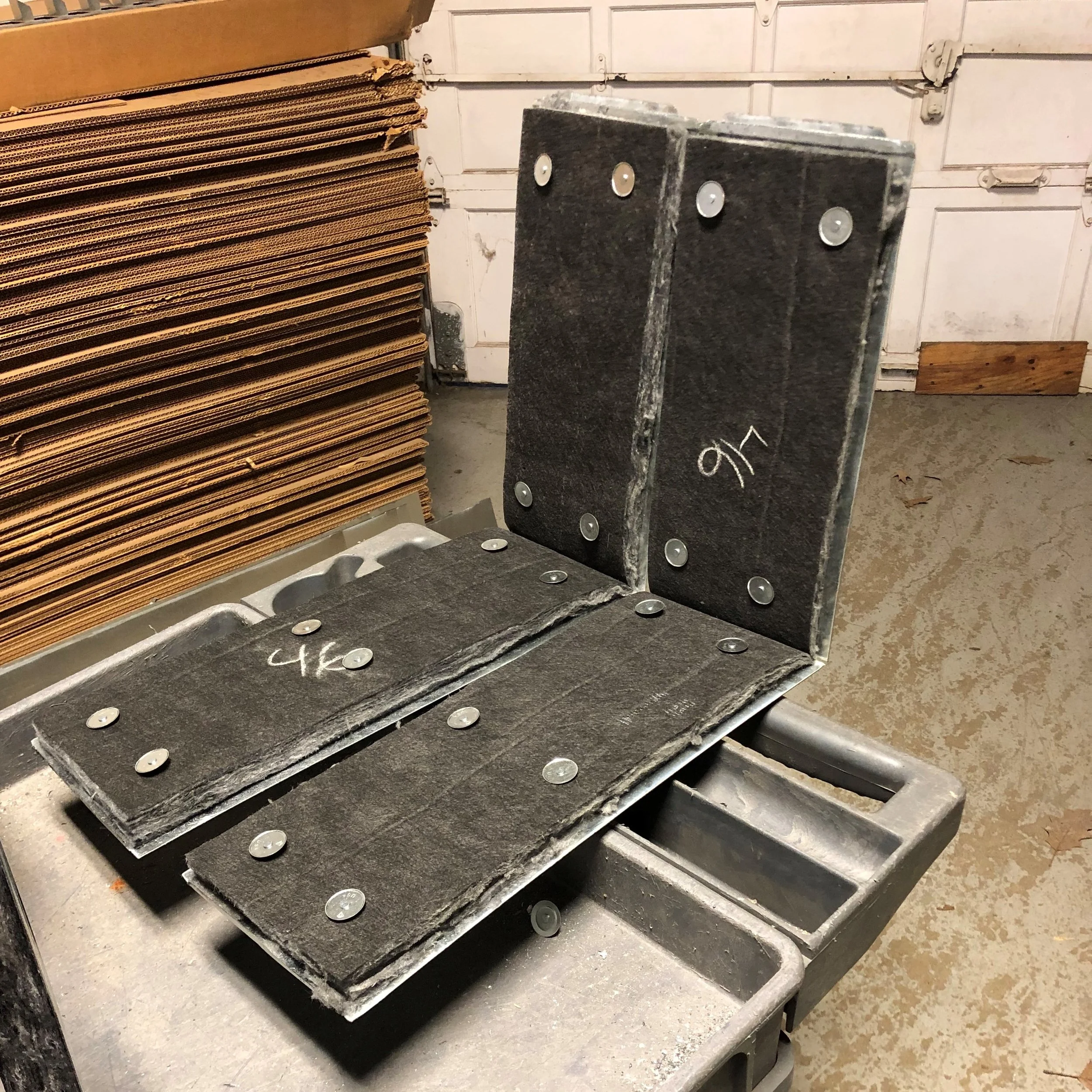
Plenum Sleeves with liner glued; waiting for pins to be welded down.
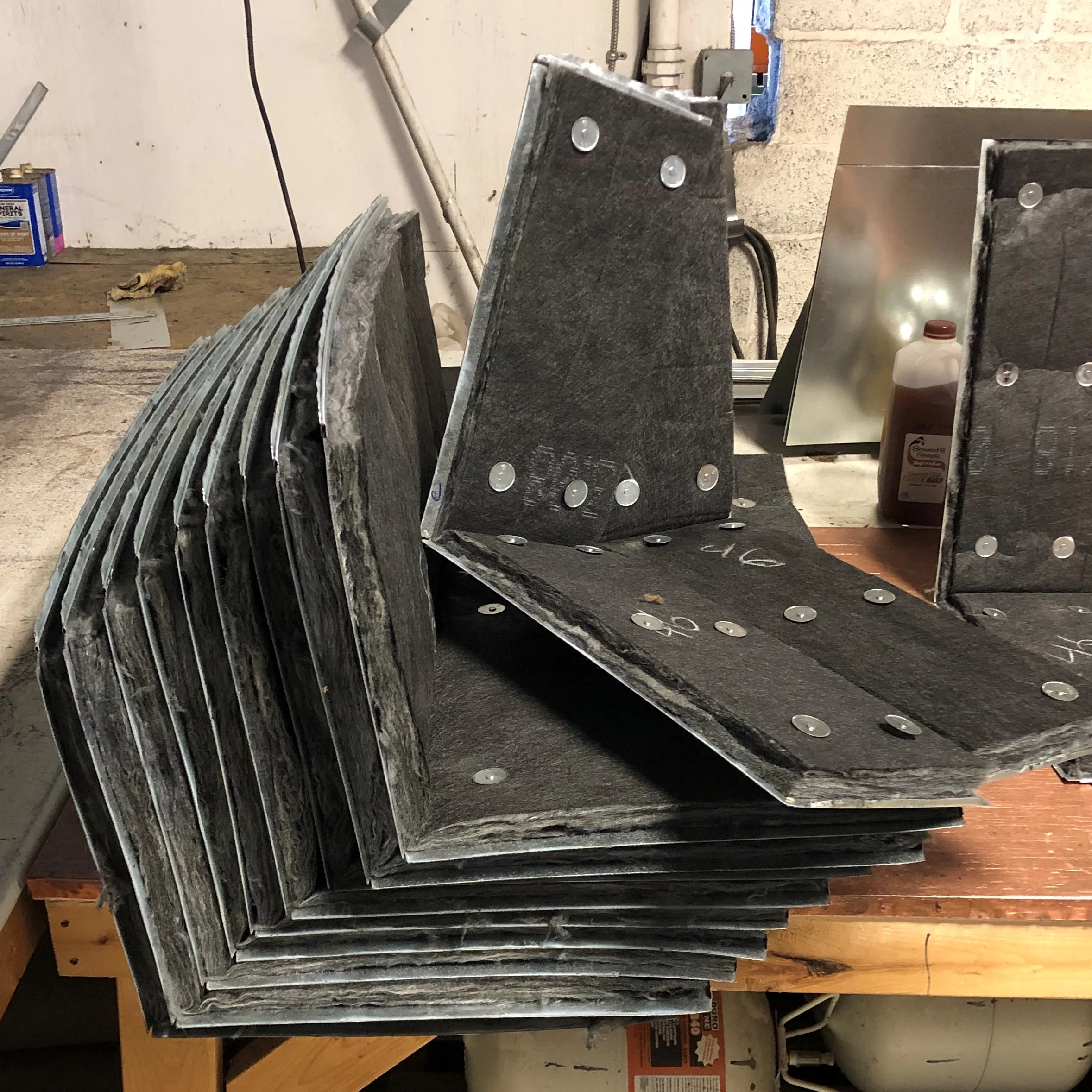
Plenums and Sleeves in multiple stages of the lining process

Steve finishing up weld pinning some plenum sleeves

Joe placing pins for the next step
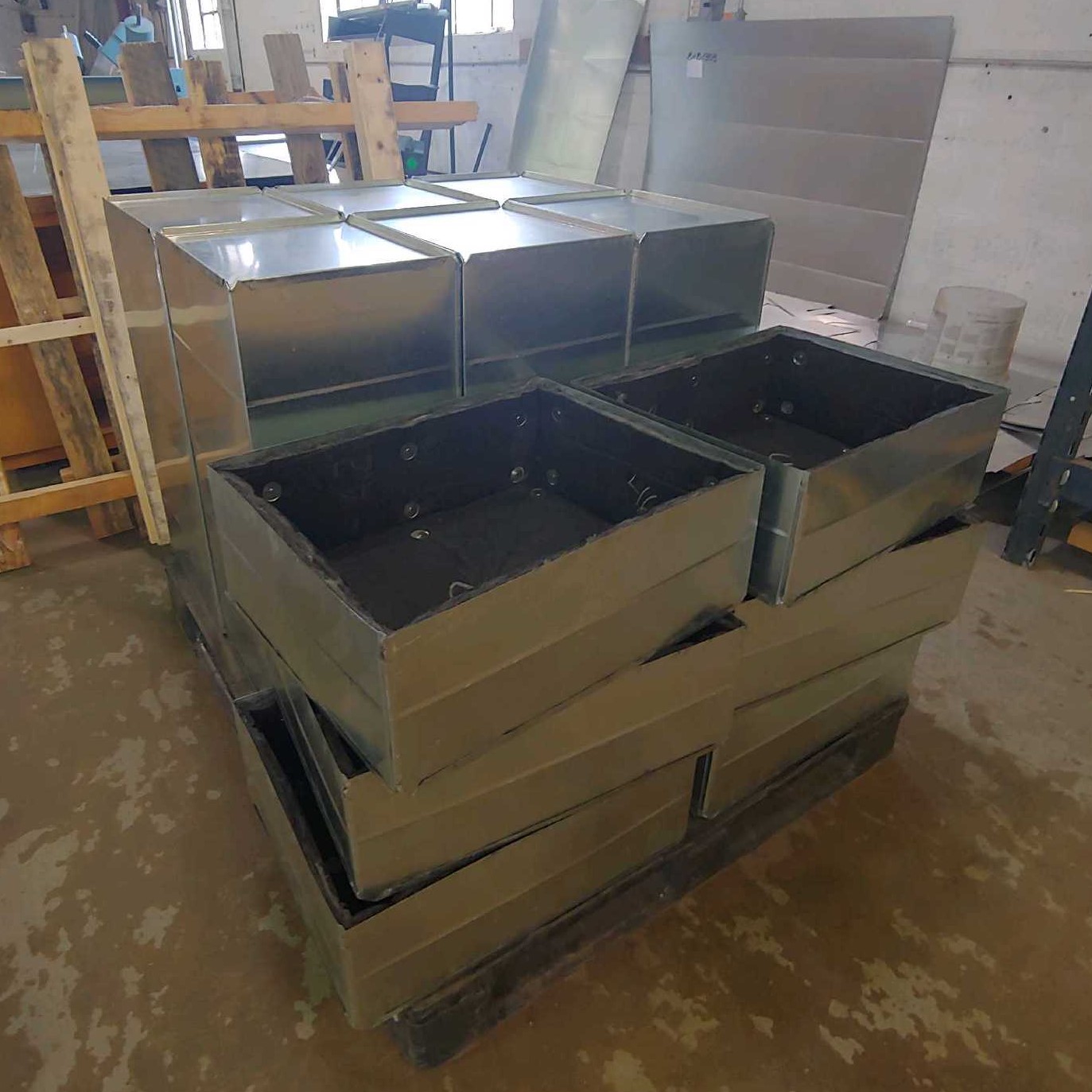
Finished and ready for pickup
Square to Round Monday
Happy Monday! The humidity has arrived in the fabrication shop, as the rains continue here in the Northeast. The floors are coated with a perfect glaze of condensation from the annoying Spring weather patterns. Rain is getting tiresome. Frustrating, but not something to get worked up over. Air conditioning to the rescue!

We move on. HVAC sheet metal fabrication stops for no weather! The square to rounds must go on!
We are busy and the name of the game today is square to round fabrication. Our shop is limited in the fact that we don’t currently have a spot welder for assembling our square to round fittings. We rivet them. Why not weld? Valid Question. One that many of you fabricators may be asking.
Truth be told, I’ve had different spot welders over the years and have never been thrilled with the results. Collars were continually popping off in the field, making it harder for our customers to get their job done efficiently. So we began riveting, which does take longer, but there is no worrying about failure in the field.
I am aware that a water cooled spot welder would be the way to go. However, it’s just not in the budget at this time. We invested heavily in equipment over the last few years and the focus is on managing that debt. We will get there.
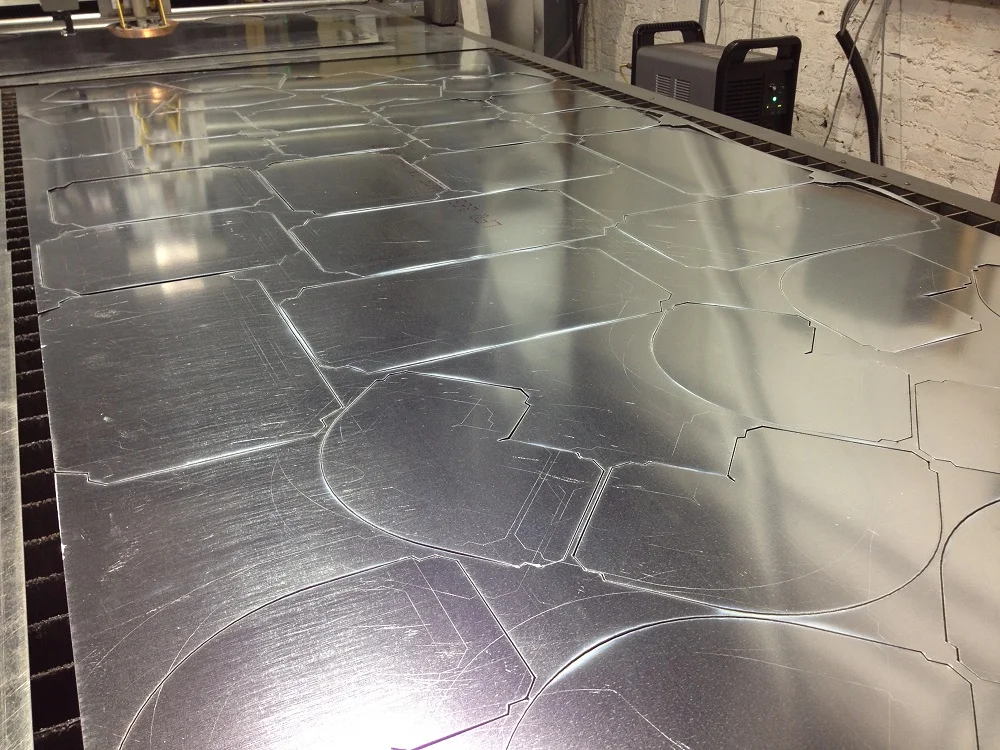
The picture below shows multiple flat stock body patterns of square to round duct fittings after being cut on the plasma table. They are marked to start the bending process.

Collars for the round portion of the fittings have been built, ready for installation after the guys have assembled the main body of the custom fittings. We usually fabricate the collars first so they are ready to go!

Custom Collars for Square to Rounds
We had a minor issue with the hand beader for the square to rounds. Below, Steve is working diligently to fix the problem.

We use the manual bead roller to crimp the top—the round end—of the fitting body. The crimp helps to make easier the installation of the collar on the fitting. We then switch out the crimping dyes for the bead dye, which helps to secure the collar to the square to round body. We finish the job with a few rivets.

Crimping
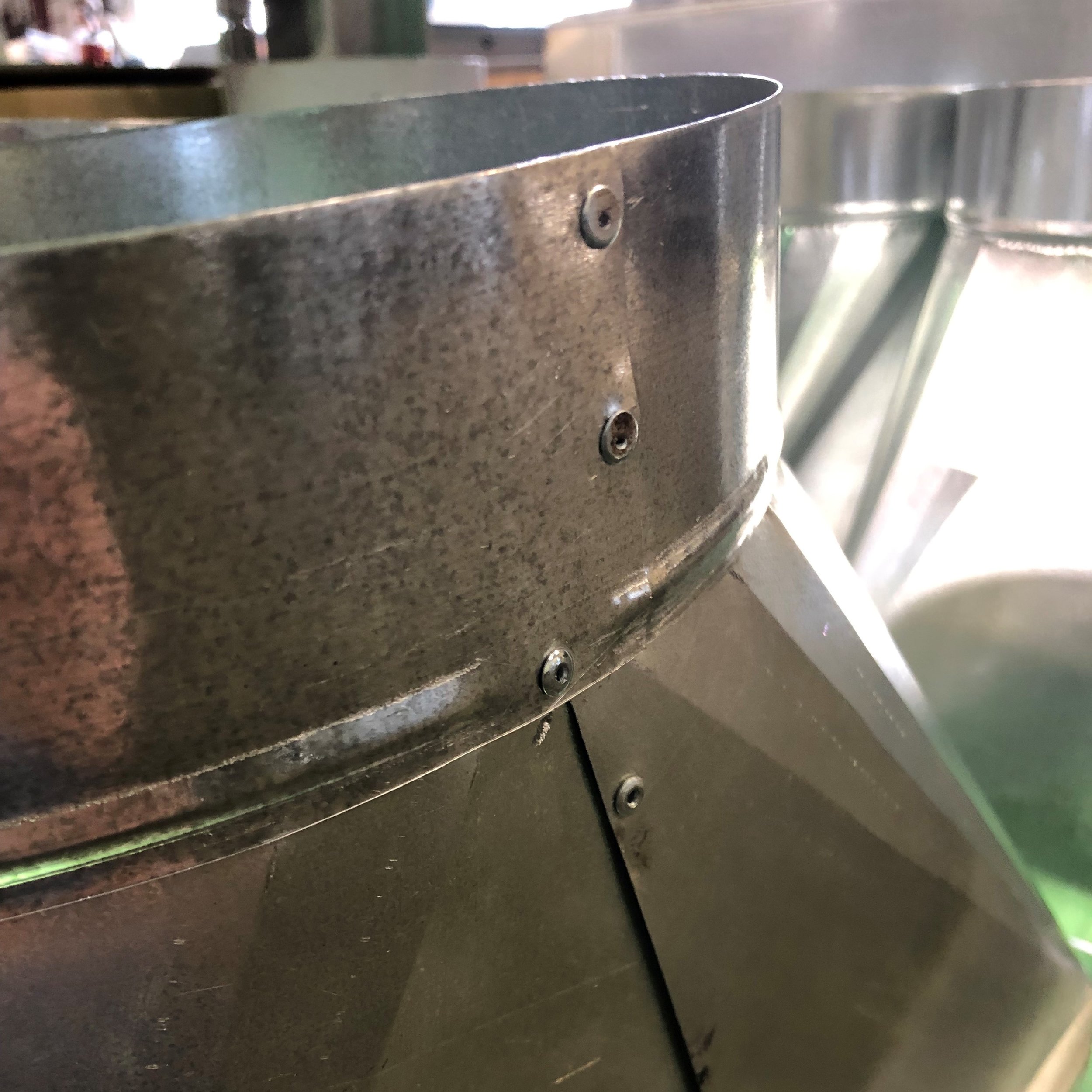
Final Bead with Rivets
We are currently fabricating an order of 75 square to rounds. They take time and we want to make sure each one is done to the best of our ability. Occasionally, that means sacrificing some speed. I think the trade-off is worth it.
Next on the docket…Custom plenum drops for a couple rooftop heating and cooling units!! Joe is starting that process this afternoon. Sheet number one has finished cutting; next we clear the table, cut the remnants for recycling and use the scrap for other items in the shop. Possibly another square to round!
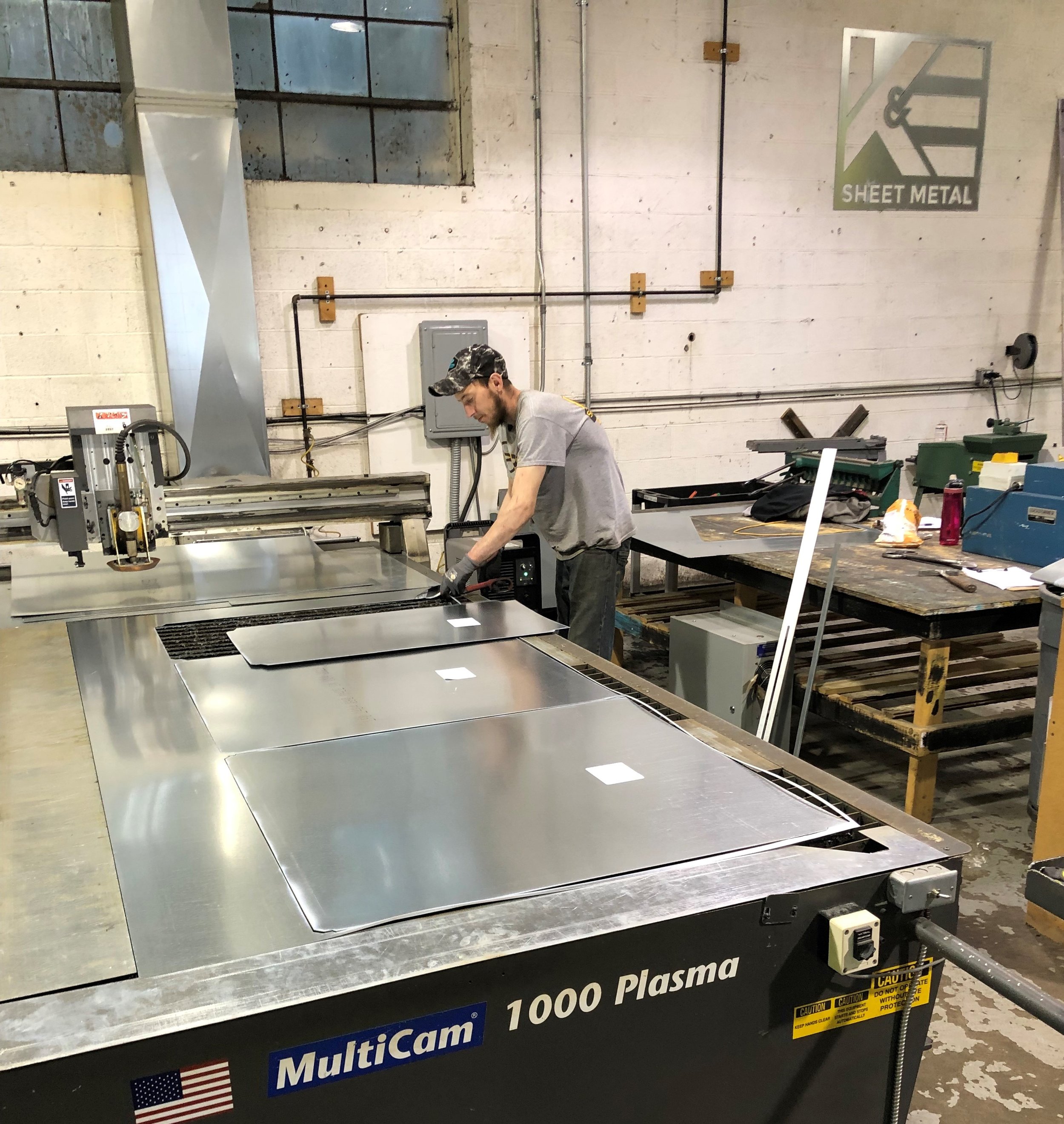
Joe clearing the plasma table.
SaraSpa Rod & Gun Club Duct Fabrication
After installing the filter boxes and elbows shown in my previous post, it is now time to fabricate the next set of duct and transitions that will run up the wall. There are three total units and each will need a 90" drop. Below are the in-progress fittings lined up in a pretty little row.

Our next task is to cut and install the Ductmate Flange System on each section of duct for easy installation when we get to the jobsite.
Wolla!

We finished up a few 90 elbows with turning vanes for the job as well. Probably could have managed a better photo but I had to assist my helper uncle with that tub of screws :)...JK
SaraSpa Rod & Gun Club Duct Installation Photos
Here are a couple pics from our most recent duct installation at the SaraSpa Rod and Gun Club in Greenfield Center, NY.

Installation of the Exit Air Unit ductwork and filter cabinet.

Installation of Make-up Air Unit duct.
The job has been progressing nicely with a lot of custom duct and fittings. Each section is fabricated with 24 gauge metal and secured together with the Ductmate Flanging System.
There is a light at the end of the tunnel regarding finishing up the installtion and fabrication. I hope to get all the photos gathered together and share them after the project is completed. With our move to a new fabrication shop space and other jobs, time has been at a premium. We are finally getting back to a somewhat normal schedule.
How Will Digital Fabrication Affect The Machines of The Future?
Will there ever be a time when machines can heal themselves? Heal may be the wrong word, but there may be a point where digital fabrication could help machines of the future fabricate their own parts.
Yesterday I was watching an extended PandoMonthly interview with Mark Suster of Upfront Ventures and the Both Sides of The Table blog. Mark is a well known venture capitalist who mainly invests in technology companies.
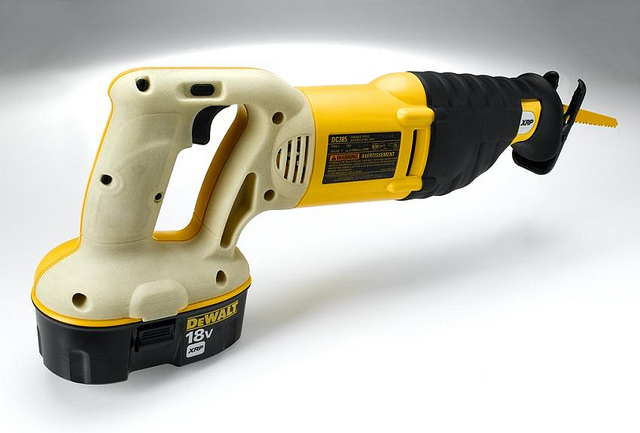
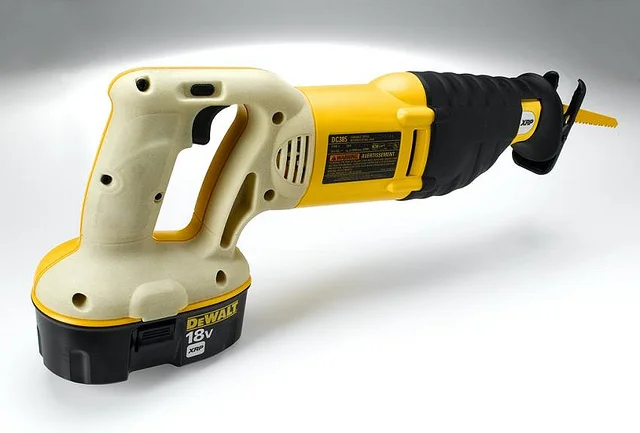
3D printed replacement part for a Dewalt saw
Will there ever be a time when machines can heal themselves? Heal may be the wrong word, but there may be a point where digital fabrication could help machines of the future fabricate their own parts.
Yesterday I was watching an extended PandoMonthly interview with Mark Suster of Upfront Ventures and the Both Sides of The Table blog. Mark is a well known venture capitalist who mainly invests in technology companies.
Near the end of the discussion he mentioned an interview with MIT's director of The Center For Bits and Atoms, Neil Gershenfeld on Fareed Zakaria's CNN show. A very interesting look at what the future may hold in regards to 3D printing and digital fabrication.
Watch below:
Understanding The Role of an HVAC Ductwork Fabricator
Have you ever heard of the term 'tin knocker'? There's a good chance you have come across the term somewhere along the line. Although, there's also a really good chance you have no idea what I'm talking about.
So what is a tin knocker anyway?
Have you ever heard of the term 'tin knocker'? There's a good chance you have come across the term somewhere along the line. Although, there's also a really good chance you have no idea what I'm talking about.
So what is a tin knocker anyway?
Although there is no real dictionary definition of the term, the accepted definition of a tin knocker is some one works with HVAC ductwork, a sheet metal worker. Meaning someone who fabricates duct and duct fittings for residential or commercial dwellings. Tin knocker can also be assigned to someone who installs ductwork on a regular basis. However, the term 'duct installer' is more common for the men and women working that job.
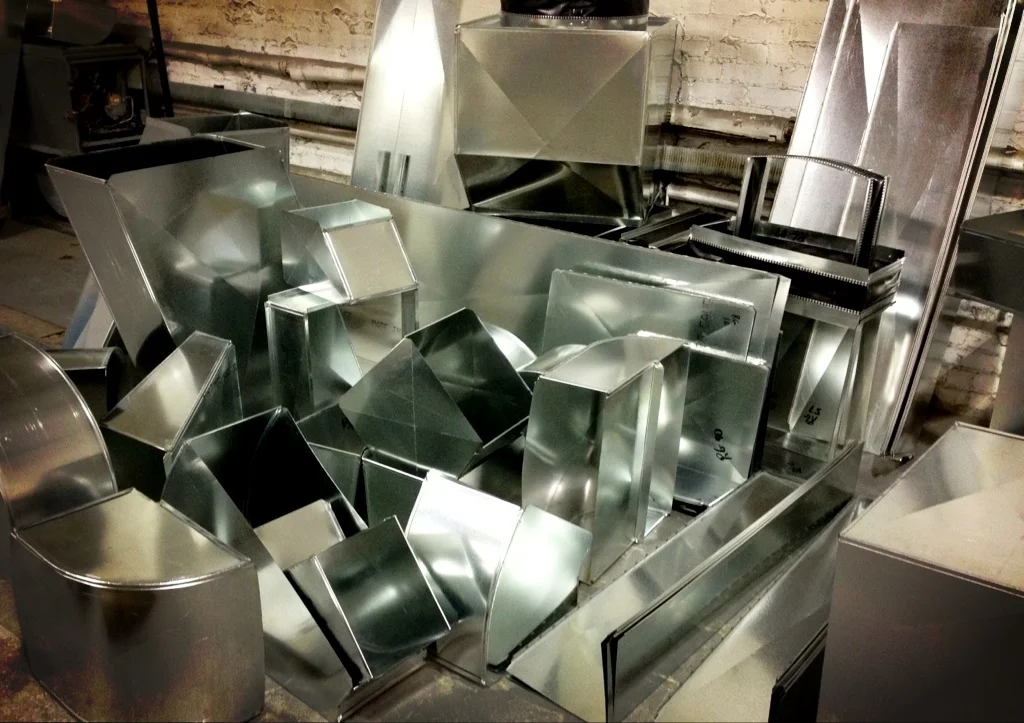
My daily job, along with co-owner duties, here at K & E Sheet Metal is HVAC ductwork fabricator or tin knocker. I fabricate the components used for the duct running through your home so heat and air conditioning can get to each of the rooms.
Our main business
Our main business is fabricating the plenums, duct, elbows and transitions needed to run the trunk line (ductwork) in the basement or attic. Many times the installer will need to run the duct under existing plumbing pipes or around a corner. Whether the piece needed is a standard fitting or a custom section, contractors or customers will call with measurements for what they need to finish the job. I, as an HVAC ductwork fabricator, build the duct to keep the job moving along.
Method to the madness
Well, in our shop it's a much simpler process than that of the larger, unionized shops knocking out ductwork for major projects around the world. Our facility takes an order from the customer--no job being too small--where I will either enter the dimensions in our computer system running the CNC plasma machine or start the cutting process by hand. Either with had tools or with our 52" wide shear, which is used to cut larger sections of duct.
After the pieces are cut, I will use our 8' sheet metal brake and other metal bending tools to form the duct fittings and custom sections one flat side at a time. Our ductwork is formed either in half sections or four different sides to create the square or box that will be the duct. This also gives me the chance to run each side through whichever roll forming machine is needed to create the joints necessary for assembling each component.
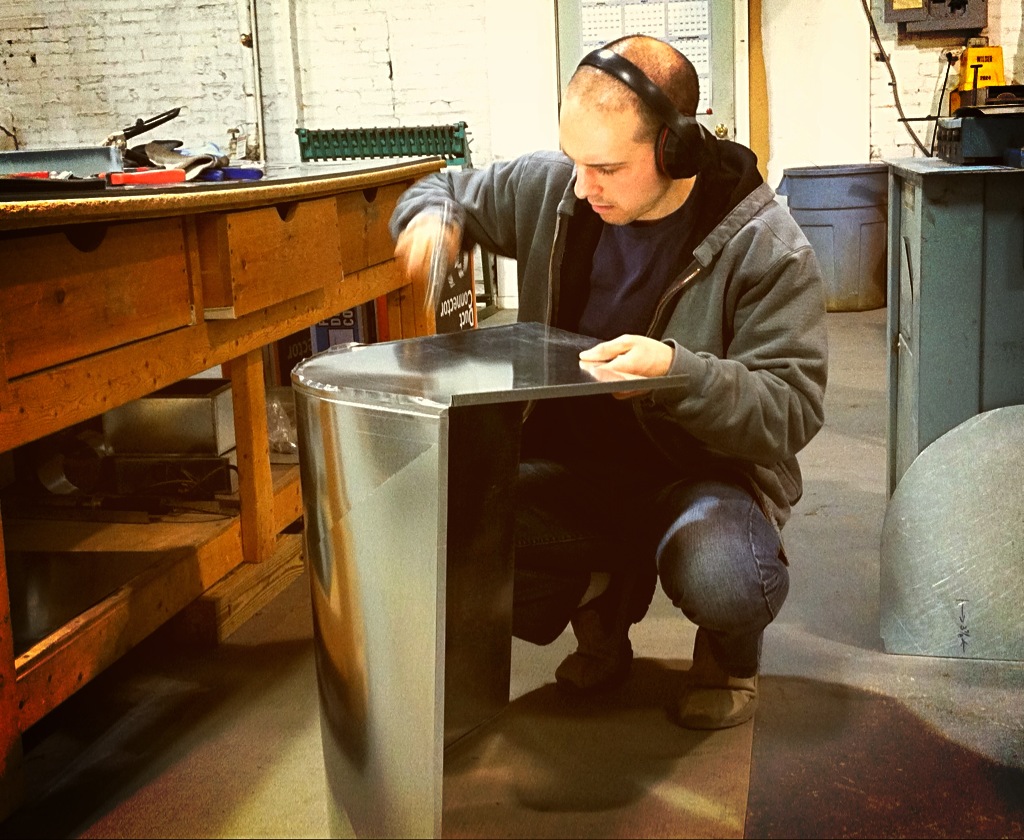
The assembly process is performed either with a hand held or air hammer, with the air hammer being the quickest form of assembly at our shop. Depending on size or type of fabrication, each piece can take anywhere from 10 minutes to 45 minutes.
Obviously. this is a very quick overview of what I do as an HVAC ductwork fabricator, but you can get a sense of the basic steps needed and where our services are very important to the installation process. In order to keep the air flow and efficiency at peak you need to have the proper sized duct and fittings to move the air. Therefore a good fabricator is a must for anyone who runs an HVAC installation company.
Keep the line moving sir
You can equate what I do to a short order cook, who needs to have something done quickly and accurately to keep the line moving. When an order is called in, the time window for me to finish is tight, roughly within 24 hours. With many orders coming through the door, this leaves hours to minutes for getting the fabrication complete, depending on the size of the order. All lead times aren't always a rush, some are weeks or even months down the line. Nevertheless, the majority of what we do in the residential market is a very quick turn around because time frames for many of the homes going up these days is fast.
Other factors that will determine what an HVAC ductwork fabricator produces on a daily basis is the size of his shop, amount of equipment, technological advancement of that equipment and number of employees fabricating ductwork.
The role of the duct fabricator hasn't changed much over the years, but the size of the shops have. There aren't many job shops like ours around these days giving homeowners and smaller companies the ability to get small orders fabricated on demand for a good price.
If anything, understand that an HVAC ductwork fabricator is an integral part of the construction of your home or commercial building.
5 Venting Issues When Installing Your New Built in Microwave
Are you installing a new built in microwave for the first time? Before you rip the box open, take a minute to make sure you have checked out the area where you will be installing the microwave first. Over the years I have helped many customers who have entered the fabrication shop looking for duct fittings needed to vent their brand new microwave oven.
Here are five of the most common venting issues they have conveyed to me.
Are you installing a new built in microwave for the first time? Before you rip the box open, take a minute to make sure you have checked out the area where you will be installing the microwave first. Over the years I have helped many customers who have entered the fabrication shop looking for duct fittings needed to vent their brand new microwave oven.
Here are five of the most common venting issues they have conveyed to me.
1. Cabinet space above is never big enough
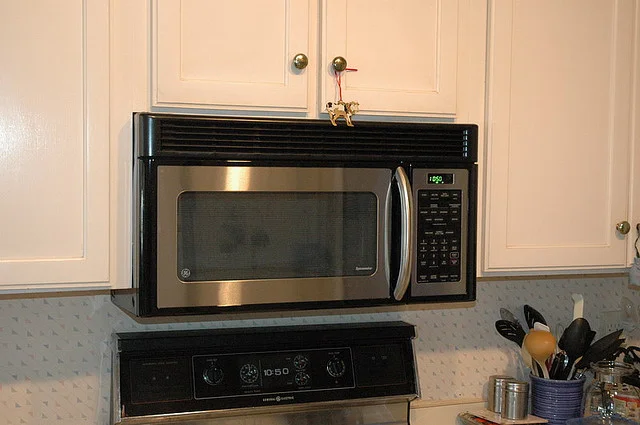
The cabinet above your microwave is notoriously tiny. Obvious reasons are because of ceiling height and most of our homes aren't blessed with 12' vaulted ceilings. If you happen to have ample space where your new microwave will live, then you probably won't have these issues. Either way, the space provided most of us for venting your brand spanking new microwave is extremely tight, leaving limited space to vent the appliance properly.
2. Manufacturers don't provide venting accessories of any kind
Nothing's as easy as they make it seem in those Home Depot or Lowe's commercials where the couple stroll into their friendly neighborhood warehouse and find exactly what they're looking for. They take it home, it fits perfectly into place and both stand back in glorious satisfaction.
Sadly, this is not how it usually happens in real life. During the project you will inevitably run into some issues while installing your new hanging microwave. Especially because the manufactures of your new microwave have no accessories for installing the vent duct to the outside of your house. They give you some basic direction, leaving it up to you for the rest of the installation. Obviously this is a major problem when trying to finish what seems like such a simple installation.
3. Manufacturers always have a rectangular outlet for venting
Another major issue, related to no accessories, is the outlet for the vent on your new microwave will almost assuredly be rectangular. Why is this such an issue? Well, the answer brings me to number four.
4. Most stock venting is round
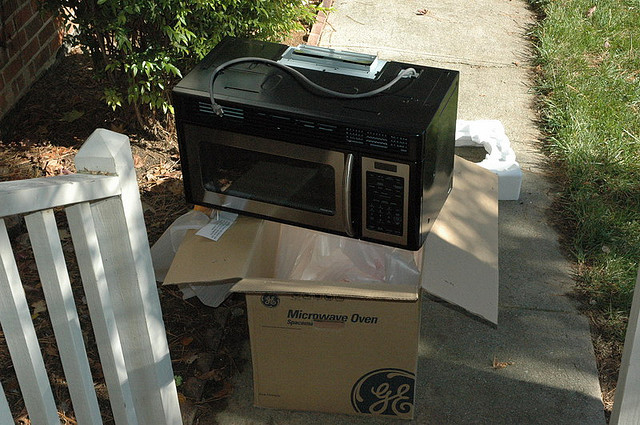
If you're hooking your new vent to an existing vent, there's a good chance the already installed duct is round. Or if you take a trip to the local hardware store, the majority of new duct and duct fittings for venting will be round. You may find some square to round duct fittings, but it's a crap shoot on whether or not you will find the size--usually 3 1/4" x 10"-- of the outlet vent on your brand new microwave.


Again, the issue when trying to install your vent in such a small cabinet. The more fittings you use, the more space is taken up. There's only so much to go around.
5. Keeping the vent rectangular means custom made
If the existing vent does happen to be rectangular, there's an even better chance the sizes of each will be completely different, leaving you looking for shops like mine to have a custom transition fabricated.
Many times this will be your best solution due to lack of resources, especially if you are a laymen when it comes to a project like this. One fabricated duct piece is much easier to fit inside your tiny cabinet rather than two or three from Home Depot. And, the cost savings is immense if you are able to find a custom fitting because the alternative is hiring someone to install the microwave for you.
Now, if you are installing the microwave in a new home or for the first time in your older home there are many more options. What do I mean by this? Well, you may have enough room to buy a stock square to round fitting and run the rest of the vent round. Or you may be able to use the stock rectangular duct from the hardware store to run the entire vent.
No matter what your situation, taking the time to map out the project to avoid these pitfalls is always a good rule of thumb.
Good Luck!